Apex vs Bulenox, 2026
Apex and Bulenox run almost the same profit targets and drawdowns. The real differences are how you pay, which platforms you get, and how fast you are paid.
And one thing they share: neither one is real capital. Here is the honest head-to-head, plus the option that is.
Skip both simulations and trade toward real, live capital? Here is Phidias. First, Apex vs Bulenox.
Apex vs Bulenox: which is better?
For most traders, Apex is the better pick on structure: it is a one-time payment (no monthly bill), works across Rithmic, Tradovate, NinjaTrader and TradingView, and lets you request a first payout after 5 days. Bulenox answers with a bit more drawdown room on small accounts, larger account sizes, and more payout methods (PayPal, Wise), but it charges a monthly subscription, is NinjaTrader-centric, and enforces a stricter 40% consistency rule. The targets and drawdowns are nearly the same. And both are simulated, so neither puts you on real capital.
Apex vs Bulenox in 30 seconds
Pick Apex if: you want a one-time payment, platform choice, a fast first payout, and a lower minimum withdrawal.
Pick Bulenox if: you trade on NinjaTrader anyway, want bigger account sizes and more payout options like PayPal and Wise, and prefer weekly payouts with no 6-payout ceiling.
Either way: both are simulated. Neither converts to real capital, and both keep a trailing floor and a consistency gate on your money.
Our verdict (William G.)
These two are more alike than either wants to admit: same targets, similar trailing drawdowns, a consistency rule on payouts, and a simulated funded account. Apex edges it on one-time pricing and platform freedom; Bulenox on payout options, larger sizes and weekly payouts. But you are choosing between two simulations. The real upgrade is a firm that converts you to real capital.
30-second quiz
Which Phidias account fits you best?
Pricing: one-time vs monthly
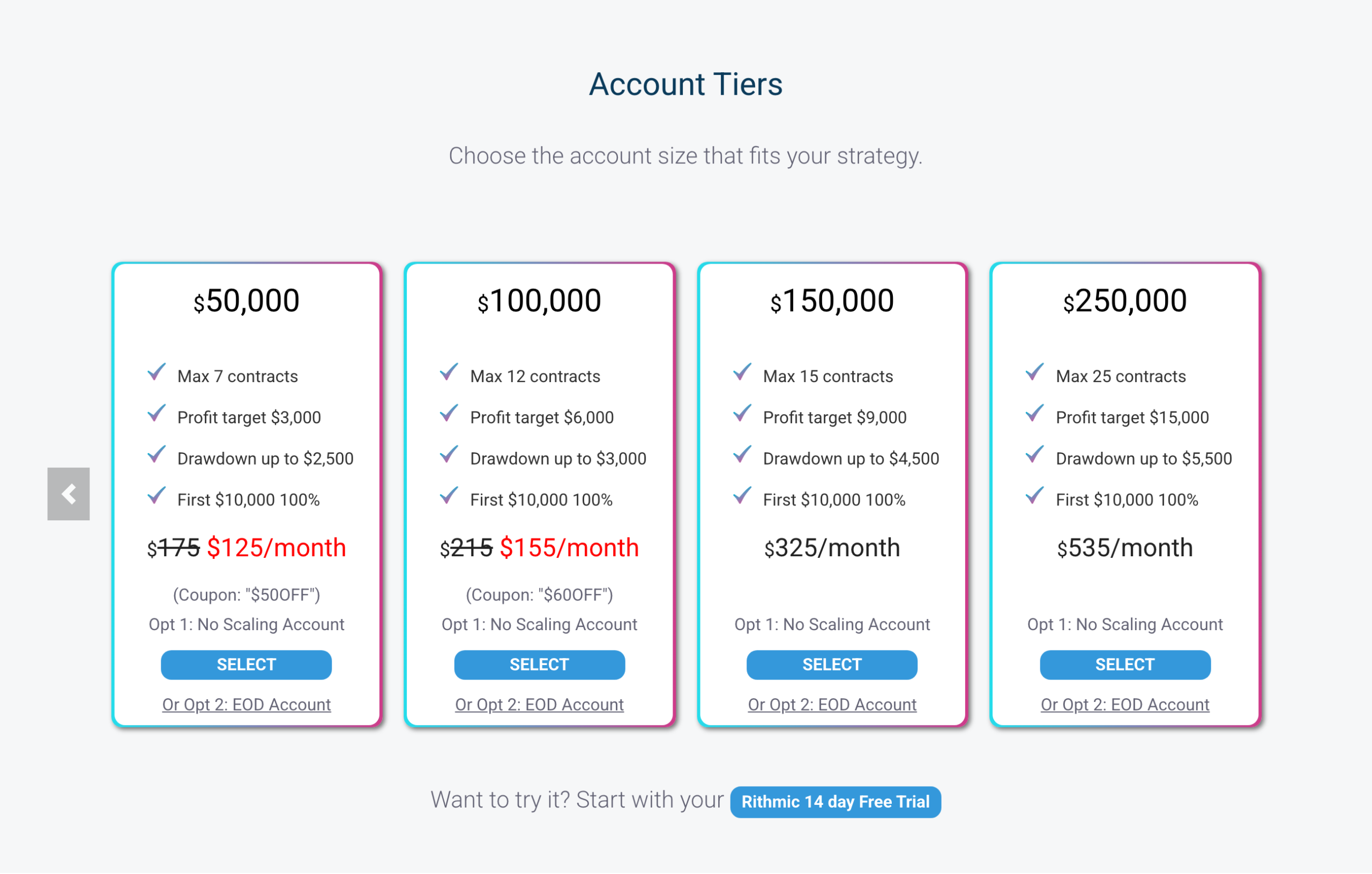
This is the clearest split. Apex switched to a one-time payment model: you buy the evaluation once, and pay a one-time activation fee when you pass. No recurring bill. Bulenox still runs a monthly subscription, roughly $125 to $535 a month by account size, that keeps charging until you cancel.
For a trader who passes quickly, Bulenox’s monthly fee can be cheap. For anyone who takes a few months, or forgets to cancel, the subscription adds up while Apex’s one-time cost does not. If price is your deciding factor, work out the real total both ways; our Apex cost breakdown shows how to do the math.
Drawdown: two trailing floors
Both firms use a trailing drawdown, and both are close in size. Apex offers an intraday trailing floor that chases your unrealized peak, or an EOD version with a daily loss limit. Bulenox trails too, stopping once it reaches starting balance + $100, and sells it as Option 1 (no daily loss limit) or Option 2 (EOD trailing with a daily loss limit).
Bulenox gives slightly more room on the smallest accounts (a $1,500 drawdown on the 25K versus Apex’s $1,000), but the mechanic is the same trap either way: a floor that follows you up and never comes back down. We break down exactly how that works in the Apex trailing drawdown guide.
Payouts and consistency
Here the two diverge in useful ways:
Speed to first payout: Apex lets you request after 5 qualifying days; Bulenox requires 10 trading days on the Master account. Apex is faster to the first withdrawal.
Consistency: Apex enforces a 50% rule; Bulenox a stricter 40% (your best day must stay under 40% of total profit). Neither applies during the evaluation. See the Apex consistency rule guide.
Caps vs cadence: Apex caps each payout and closes the account after 6 payouts. Bulenox pays 100% of your first $10K, then 90/10, on a weekly (Wednesday) cadence with no 6-payout ceiling. The Apex payout ladder is in our Apex payout rules guide.
Methods and minimums: Apex pays by ACH (or Plane internationally) with a $500 minimum. Bulenox adds Wire, PayPal and Wise, with a $1,000 minimum.
Platforms
If platform choice matters, Apex wins clearly. Apex runs on Rithmic, Tradovate, NinjaTrader and TradingView, so you can trade on the software you already use. Bulenox is built around NinjaTrader (with a Rithmic data feed) and does not offer the same spread of options. If you live on TradingView or Tradovate, that alone can decide it.
What they both are: simulated
Step back and the biggest fact about this matchup is what Apex and Bulenox have in common. Both are simulated-funding firms. Your funded account trades virtual money, your payout is a reward paid at the firm’s discretion, and there is no path to a real, live brokerage account in your name. You are choosing which simulation to rent, not where to trade real capital.
Apex vs Bulenox vs Phidias
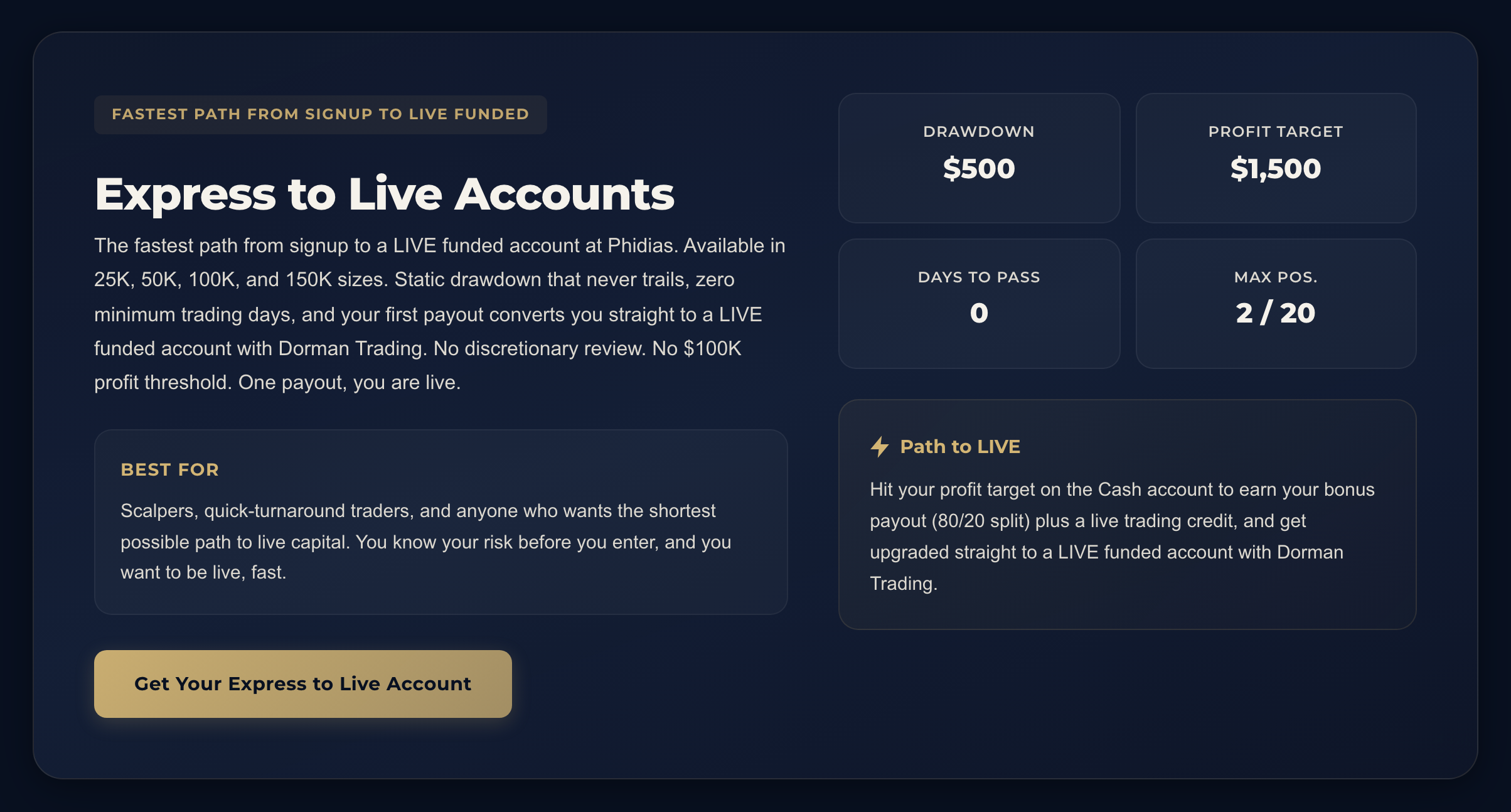
Between Apex and Bulenox, pick on pricing, platform and payout preference. But if the goal is to actually trade real money and not rent a simulation, Phidias is the one that gets you there. The quiz above points you to the right account, and our Apex alternative guide makes the full case.
Apex vs Bulenox: frequently asked questions
Is Apex or Bulenox better?
It depends on what you value. Apex is better for one-time pricing, platform choice and a faster first payout. Bulenox is better for bigger account sizes, weekly payouts and payout methods like PayPal and Wise, though its 40% consistency rule is stricter than Apex’s 50%. Both are simulated.
Is Bulenox cheaper than Apex?
It can be, if you pass fast. Bulenox charges a monthly subscription (about $125 to $535), while Apex is a one-time payment plus an activation fee. Take a few months and Bulenox’s subscription can end up more expensive.
Does Bulenox only work on NinjaTrader?
Bulenox is NinjaTrader-centric (with a Rithmic data feed), so it offers far less platform choice than Apex, which supports Rithmic, Tradovate, NinjaTrader and TradingView.
Which has better payouts, Apex or Bulenox?
Apex is faster to the first payout (5 days vs 10) with a lower minimum ($500 vs $1,000), but caps each payout and closes the account after 6. Bulenox pays weekly with more methods and no 6-payout ceiling. Different strengths.
Are Apex and Bulenox real money?
No. Both are simulated-funding firms: the funded account trades virtual money and payouts are discretionary. Neither converts to a live brokerage account. Phidias Express to Live does, on your first payout.
The bottom line
Apex and Bulenox are near-twins on targets and drawdown. Apex wins on one-time pricing, platform freedom and payout speed; Bulenox wins on larger sizes, payout options and no 6-payout ceiling. If you must pick between the two, choose on those trade-offs.
But both keep you in a simulation. If you would rather trade a static floor and convert to real capital, Phidias Express to Live is the third option worth comparing. Take the quiz above to find your account.
Sources and official references
• Bulenox (official): account sizes, profit targets, drawdown, contracts and pricing.
• Bulenox: Master Account: the 40% consistency rule, 10-day minimum, and weekly payouts.
• Apex Trader Funding (official): eval specs, payout rules and activation fees.
• Phidias accounts: Express to Live static drawdown and the LIVE conversion.
About the author
William G. is a futures prop-trading analyst at Phidias. He tests prop firms hands-on, reads the fine print in every help center and rulebook, and translates payout, drawdown and funding mechanics into plain English for traders deciding where to put their capital.
Last reviewed 2026.
Related Apex guides
Apex Cost: the real total of Apex’s one-time model, fees and all.
Apex Trailing Drawdown: the floor both firms use, explained.
Apex Trader Funding 4.0 Explained: the full breakdown of every account and rule.
Risk disclosure: Futures trading involves substantial risk of loss and is not suitable for all investors. Past performance is not indicative of future results. Apex and Bulenox account specs, pricing, drawdown, consistency and payout terms reflect publicly available information from each firm as of July 2026 and are subject to change; verify current terms on apextraderfunding.com and bulenox.com before purchasing. This article is informational and not financial advice.