Summary: A no consistency rule prop firm lets you keep your profits even if one big day makes up most of your gains, unlike firms that require your daily results to stay balanced. A consistency rule usually caps a single day at around 50% of total profit before a payout, which protects the firm from one lucky trade but frustrates skilled traders who catch a large move. No consistency rule accounts remove that cap, so a single strong session still counts toward a withdrawal. This guide explains what the consistency rule is, how it is calculated, and what to check before choosing a no consistency rule funded account.
The consistency rule is one of the most misunderstood parts of prop firm trading. Here is what it means and why some traders want an account without it.
What is a consistency rule?
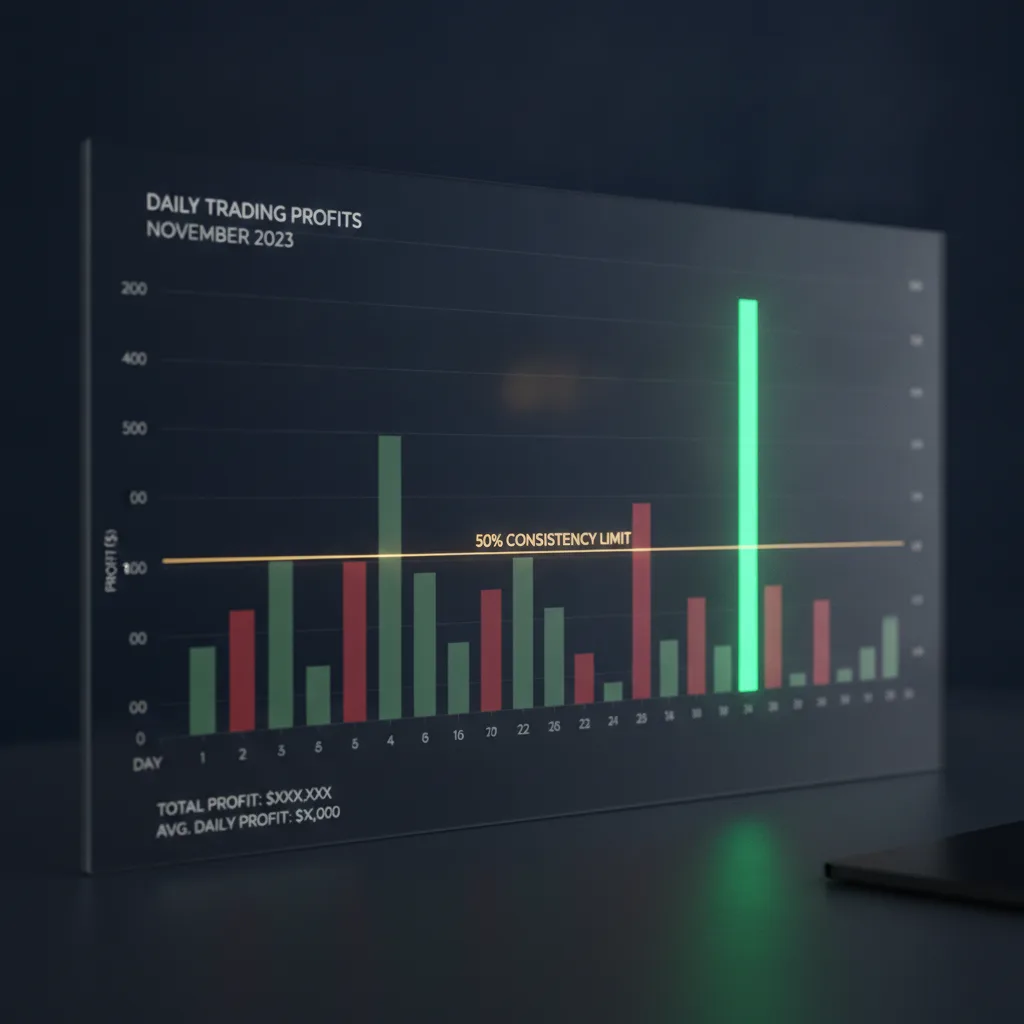
A consistency rule limits how much of your total profit can come from a single trading day. Most firms set the cap near 50%, meaning your best day cannot exceed half of your total gains when you request a payout. The goal is to reward steady, repeatable trading rather than one lucky session, and to protect the firm from paying out a fluke. It is a payout condition, not a hard breach, so hitting it usually delays a withdrawal rather than failing the account.
How the consistency rule is calculated
The math is simple. Divide your best day’s profit by your total profit. If your best day is more than the firm’s threshold, often 50%, you must keep trading until the balance shifts. For example, with $5,000 total profit and a 50% rule, no single day can contribute more than $2,500. Many firms offer a consistency rule calculator so you can track this live. To pass, you spread gains across several days rather than relying on one outsized session.
What a no consistency rule prop firm means
A no consistency rule prop firm removes that cap entirely. If you catch a large move and make most of your target in one day, it still counts toward your payout. This suits traders who trade news, momentum or a few high conviction setups per week, where profit is naturally lumpy. Many instant funding firms advertise no consistency rule as a selling point. The freedom is real, but it does not remove the other rules that decide whether you actually get paid.
Consistency rule vs no consistency rule
Neither model is automatically better, they suit different styles. The table below compares them so you can match the account to how you trade.
| Feature | Consistency rule | No consistency rule |
|---|---|---|
| Best day cap | Usually 50% of total profit | No cap |
| Best for | Steady, repeatable daily trading | News, momentum, lumpy profits |
| Payout timing | May delay a withdrawal | Faster if other rules are met |
| Risk of gaming | Lower for the firm | Higher, so drawdown rules tighten |
| Trader freedom | More restrictive | More flexible |

What to check in a no consistency rule firm
No consistency rule is attractive, but it is only one rule. Check the drawdown type, since firms that drop the consistency rule sometimes tighten the drawdown to manage risk. Confirm the payout policy is reliable and withdrawals are never refused, and read the news and holding rules. A no consistency rule account with a punitive trailing drawdown can be harder to pass than a consistency rule account with fair rules. Judge the whole rulebook, not one headline feature.
Take action with Phidias Propfirm
Want fair rules across the board? Phidias was built on a simple idea: we profit when you go LIVE, not when you fail. A static or end of day drawdown with no hidden buffer, news trading on every account, overnight and weekend holding on Premium, a profit split that climbs to 100%, and real live capital through Dorman Trading. Selective rules, never punitive, and payouts that are never refused. Compare options in our best futures prop firms guide, find a low cost entry on our cheapest accounts, or read real trader reviews. Trade your way with a fair funded account at Phidias Propfirm.
Frequently Asked Questions
What is the consistency rule in prop trading?
It limits how much of your total profit can come from one day, usually capping your best day at around 50% before a payout. It rewards steady trading and protects the firm from paying out a single lucky session.
What does no consistency rule mean?
It means there is no cap on how much of your profit can come from a single day. A large one day gain still counts toward your payout, which suits traders with lumpy, high conviction results.
How is the 50% consistency rule calculated?
Divide your best day’s profit by your total profit. If the best day is more than 50%, you must keep trading until the balance falls under the threshold. A consistency rule calculator lets you track this live.
Are no consistency rule prop firms better?
Not automatically. They offer more freedom, but you must still check drawdown type, payout reliability and news rules. A no consistency rule account with a punitive drawdown can be worse than a fair account that has the rule.
Why do prop firms use a consistency rule?
To reward repeatable skill and prevent traders from passing on one outsized or lucky day. It lowers the firm’s risk of paying out a fluke, which is why some firms trade it off against tighter drawdown limits.