Is Apex Trader Funding Legit, 2026
What Apex says it has paid since 2022. So no, it is not a scam. The real problem is what happens between you and that money.
A permanent simulation you are meant to keep re-buying, a punishing trailing drawdown, and a heavily documented history of denied payouts and reported trader bans. Here is the honest picture.
Want a firm that puts you on real, live capital instead of a simulation? Here is how Phidias is built. First, the honest answer on Apex.
Is Apex Trader Funding legit?
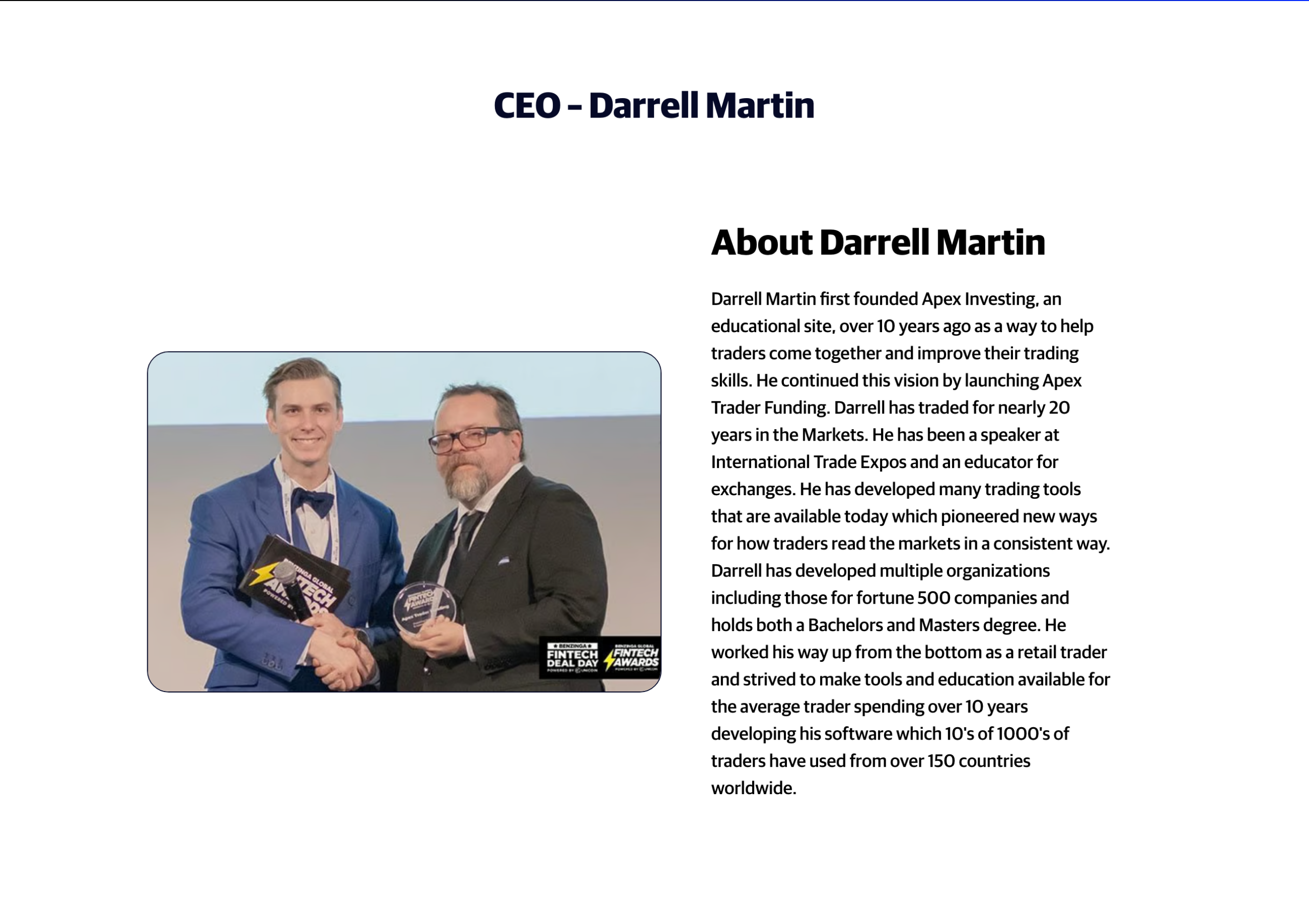
Yes, Apex Trader Funding is a real, established company, not a scam. It was founded in 2021 by Darrell Martin, is based in Austin, Texas, and says it has paid traders over $819 million. But “not a scam” is a low bar. The honest concern is not whether Apex is legit, it is the model: a permanent simulation you never leave for real capital, sold cheap so you buy many accounts, wrapped in rules that fail most of them, and backed by a documented history of denied payouts and reported trader bans. Real company. Serious red flags.
Legit or scam in 30 seconds
It’s real: a US company since 2021, a named CEO, mainstream press, a high Trustpilot score, and hundreds of millions in reported payouts. Not a scam.
The real red flags: a documented history of denied payouts and reported mass trader bans, no path to real capital (it stays a simulation), and a cheap-account model that profits when accounts fail.
Verdict: legit, but it looks more like a simulated lottery than a path to a trading career.
Our verdict (William G.)
Apex is not a scam, and the “is it legit” question misses the point. In my view the bigger issue is the design: you never reach real capital, the accounts are sold cheap to encourage you to buy several, the intraday trailing drawdown fails most of them, and Apex spent 2024 and 2025 at the center of payout-denial and trader-ban controversy. That is not fraud. It is an incentive structure that pays the house, not the trader.
30-second quiz
Which Phidias account fits you best?
First, the part that is real
Let’s be fair before the criticism. On “is this a real company that pays,” the evidence is genuinely strong, and anyone shouting “scam” is wrong:
A real, named company. Founded in 2021 by Darrell Martin, run out of Austin, Texas, with mainstream coverage from Benzinga, NASDAQ, Yahoo Finance and Business Insider.
Large reported payouts. Apex’s own public payout counter reports over $819 million paid to customers since 2022. Many, many traders have genuinely been paid. That is not in dispute.
A high Trustpilot score. Around 4.4 out of 5 from more than 18,000 reviews as of mid-2026. A large, mostly positive sample.
So the company is real and it pays a lot of people. Now the part the reviews with an affiliate link tend to skip.
Red flag 1: a documented history of denied payouts and banned traders
Through 2024 and 2025, Apex was arguably the most controversial large prop firm in futures, and the recurring theme was payouts. This is well documented, and it is worth knowing before you fund an account. To be clear, these are reported events and trader accounts, not proven findings of wrongdoing.
Subjective denials. Apex’s legacy manual payout review drew heavy criticism for denials citing vague, subjective reasons such as “erratic trading” or “windfall” behavior. Traders reported clearing the rules on paper and still being turned down.
“Record yourself trading, or you don’t get paid.” Finance Magnates reported that Apex asked some traders requesting payouts to video-record themselves trading for two days before funds would be released. That is not a normal payout process.
Mass bans of profitable traders. In May 2025, Apex reportedly banned a large number of profitable traders, many of whom said they received no clear explanation for the ban or the withheld payout.
Backlash it could not contain. After a wave of trader anger in June 2024, Apex reportedly shut down its own Discord server. Firms do not silence their community when things are going well.
In fairness: Apex’s 4.0 overhaul replaced manual payout review with an automated system, and early community reports show approvals going through with fewer denials. That is a real improvement. But the automated system is new, the reputation it is trying to repair took years to build, and the exact rules a payout has to clear are still strict. See our Apex payout rules guide for what a withdrawal actually has to pass.
Red flag 2: you never reach real capital
This is the one almost no review states plainly. With Apex, there is no path to real, live capital. The funded account is a simulation, and it stays a simulation forever. Apex’s own risk disclosure says so: “all activity occurs in a simulated environment using virtual funds; no real capital is at risk,” and “reward payouts are discretionary.”
So even when everything goes right, you are not building toward a live brokerage account in your name. You are collecting discretionary rewards from a simulation, forever, at the firm’s discretion. For a trader who wants to actually go pro on real money, that is a ceiling, not a career.
Red flag 3: a cheap-account model that profits when you fail
Look at how the product is sold. Apex lets you run up to 20 accounts at once and discounts evaluations by up to 90% almost year-round. The pitch is “grab a handful of cheap accounts and see what sticks.”
Now stack that against the rules behind the cheap price: a brutal intraday trailing drawdown that fails accounts fast, a 50% consistency rule on payouts, and per-payout caps. Most of those cheap accounts blow up. In our view, the economics start to look less like funding traders and more like selling lottery tickets: the price is low, most tickets lose, and the firm’s revenue comes from the next batch of evaluations, not from your trading success.
That is the real question, not “is Apex a scam.” It is: do you want to gamble on cheap simulated accounts where the house profits when you fail, or build toward real capital where the firm only wins when you get paid?
How Phidias compares
Both firms sell an evaluation, so on the surface they look alike. The difference is what a “funded” account actually is, and whether it ever becomes real.
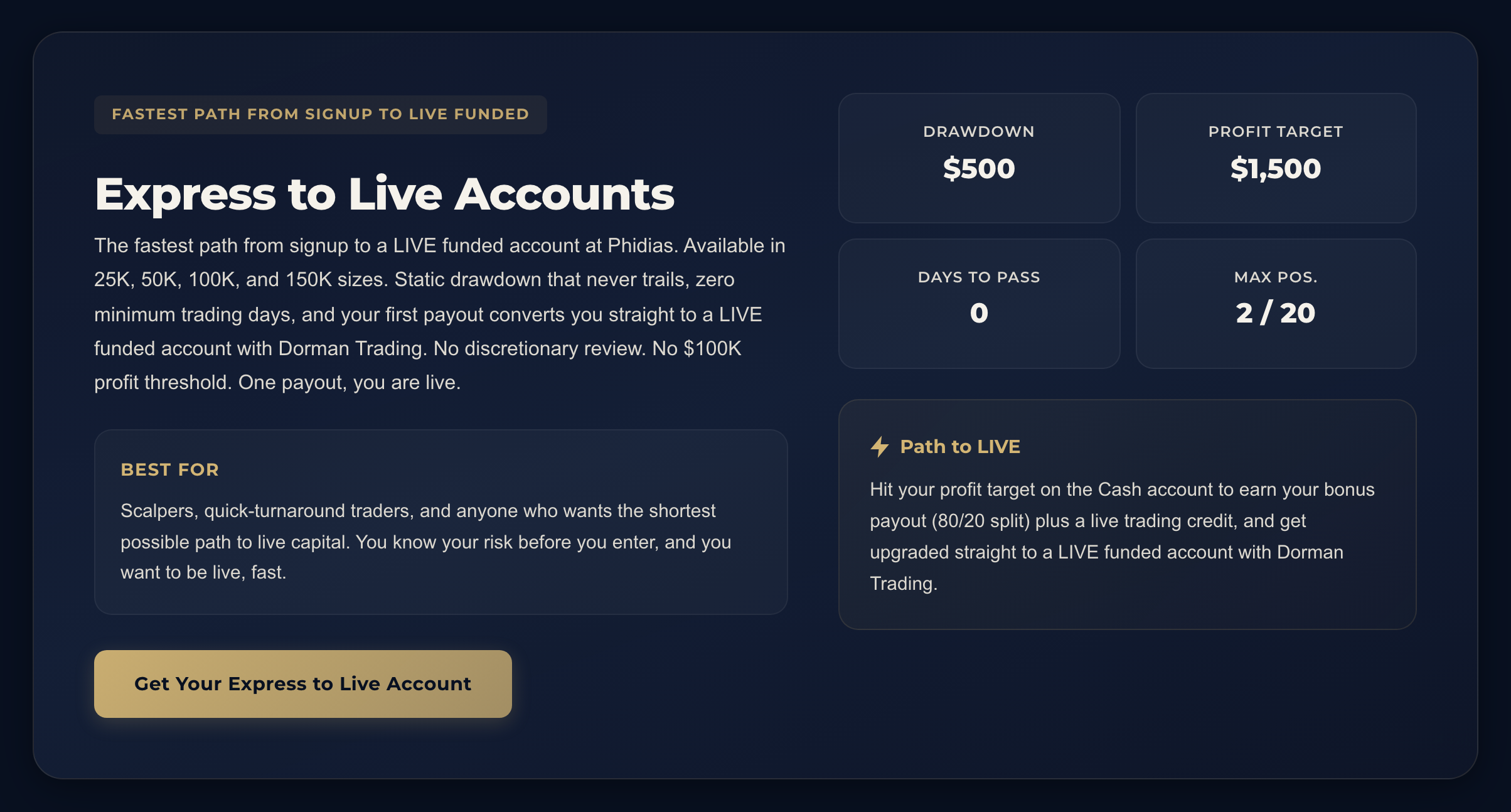
Apex is legit, and it pays a lot of traders. But Phidias is built so the thing you are working toward is real capital on a registered broker, with a clean payout record, and the firm only wins when you do. Not sure which Phidias account fits you? The quiz above points you to the right one, and our Apex alternative guide lays out the full case.
Is Apex legit: frequently asked questions
Is Apex Trader Funding a scam?
No. Apex is a real, established company that has operated since 2021 and reports paying traders over $819 million. It is not a scam. The valid criticisms are about its model and its payout history, which is a different thing from fraud.
Has Apex Trader Funding denied payouts or banned traders?
Yes, this is well documented. Through 2024 and 2025, Apex faced heavy criticism for subjective payout denials, an episode where traders were reportedly asked to record themselves trading to get paid, and reports of mass bans of profitable traders in May 2025. These are reported events, not proven findings. Apex’s 4.0 automated system has since reduced reported denials.
Does Apex Trader Funding trade real money?
No. By its own disclosure, Apex accounts are simulated with virtual funds and no real capital is at risk. Payouts are rewards paid at Apex’s discretion, and the account never converts to a live brokerage account in your name.
Does Apex Trader Funding actually pay out?
Yes, broadly. Apex reports over $819 million in payouts and has thousands of positive reviews. Payouts are real, but they are conditional on meeting the rules, and the firm has a documented history of disputing or denying them.
Is there an Apex Trader Funding lawsuit?
Yes. There is documented litigation involving Apex, a 2024 federal case in the U.S. District Court for the Western District of Texas (Riot v. Apex Trader Funding, case 1:24-cv-01557), in which Apex has also filed counterclaims. It is an individual dispute, not a class action, and the matter is unresolved. A pending lawsuit is a claim, not a finding of wrongdoing, and the court records are public.
Who owns Apex Trader Funding?
Apex was founded and is led by Darrell Martin, based in Austin, Texas, with a background in options and futures trading.
The bottom line
Is Apex Trader Funding legit? Yes, it is a real company, not a scam. But that is the wrong question. The honest answer is that Apex is a permanent simulation sold cheap to encourage many accounts, wrapped in rules that fail most of them, with a documented 2024 to 2025 history of denied payouts and banned traders. Not fraud. Just a model built to profit when you lose.
If you would rather work toward real capital on a registered broker, with a clean payout record and a firm that only wins when you get paid, Phidias Express to Live is built for exactly that. Take the quiz above to see which account fits you.
Sources and references
• Apex: About (official): leadership, company background and press coverage.
• Apex on Trustpilot: the live review score and volume.
• Reporting on Apex’s payout process and controversies (2024 to 2025), including coverage by Finance Magnates and trader communities such as Elite Trader.
• U.S. federal court records (PACER / CourtListener): Riot v. Apex Trader Funding Inc., case 1:24-cv-01557, W.D. Texas.
• Dorman Trading: the NFA-registered broker behind Phidias LIVE accounts.
• Phidias accounts: Express to Live and the real LIVE conversion.
About the author
William G. is a futures prop-trading analyst at Phidias. He tests prop firms hands-on, reads the fine print in every help center and rulebook, and translates payout, drawdown and funding mechanics into plain English for traders deciding where to put their capital.
Last reviewed 2026.
Related Apex guides
Apex Payout Rules: exactly what a payout has to clear, and why some are held.
Best Apex Alternative: why traders move to real capital with Phidias.
Apex Trailing Drawdown Explained: the mechanic that fails most cheap accounts.
Risk disclosure: Futures trading involves substantial risk of loss and is not suitable for all investors. Past performance is not indicative of future results. Statements about Apex Trader Funding reflect publicly available information as of July 2026, including Apex’s own disclosures and figures and third-party reporting. Payout figures and Trustpilot scores are as reported and change over time. Descriptions of payout denials, trader bans and related controversies are based on trader reports and press coverage from 2024 to 2025 and represent those accounts, not proven findings of wrongdoing; Apex’s 4.0 update has since changed its payout process. Characterizations of Apex’s business model are the author’s opinion. Verify current terms on apextraderfunding.com. This article is informational and not financial advice.